Historic maps

Why are they inaccurate? How were they improved?

July 7, 2022

Maps are one of the oldest collaborative perpetual works in human history, an evolutive process, a permanent product of improvement over the work of others that preceded us. Even though we may change many things, like place names and drawing of shapes, it's common that we maintain many of previous arbitrary assumptions, like orientation, geographic references, selected features to be represented, etc.

Maps are always at some level inaccurate, because they are always a selective and valorative representation of reality. Although when we first see some old maps, even if we realize how inaccurate they can be, we usually can intuitively recognize what they are representing.

Why are old maps usually more inaccurate when compared to contemporary ones, while some other even older human works of depiction, like artistic portraits from the Renaissance, can be almost perfect representation of their subjects?

One of the reasons is that maps, and mostly old maps, rely not exclusively on direct observations, but most times also on authoritative reports of explorers, as well as on indirect measurements.
How can maps be analyzed and improved? One oldest way is to compare them with other maps, by overlapping them, adjusting them as best as possible, to search for place names and try to find distortions that eventually can be fixed to real position, eventually resulting in new maps, or just to study those maps. We can do this digitally today.

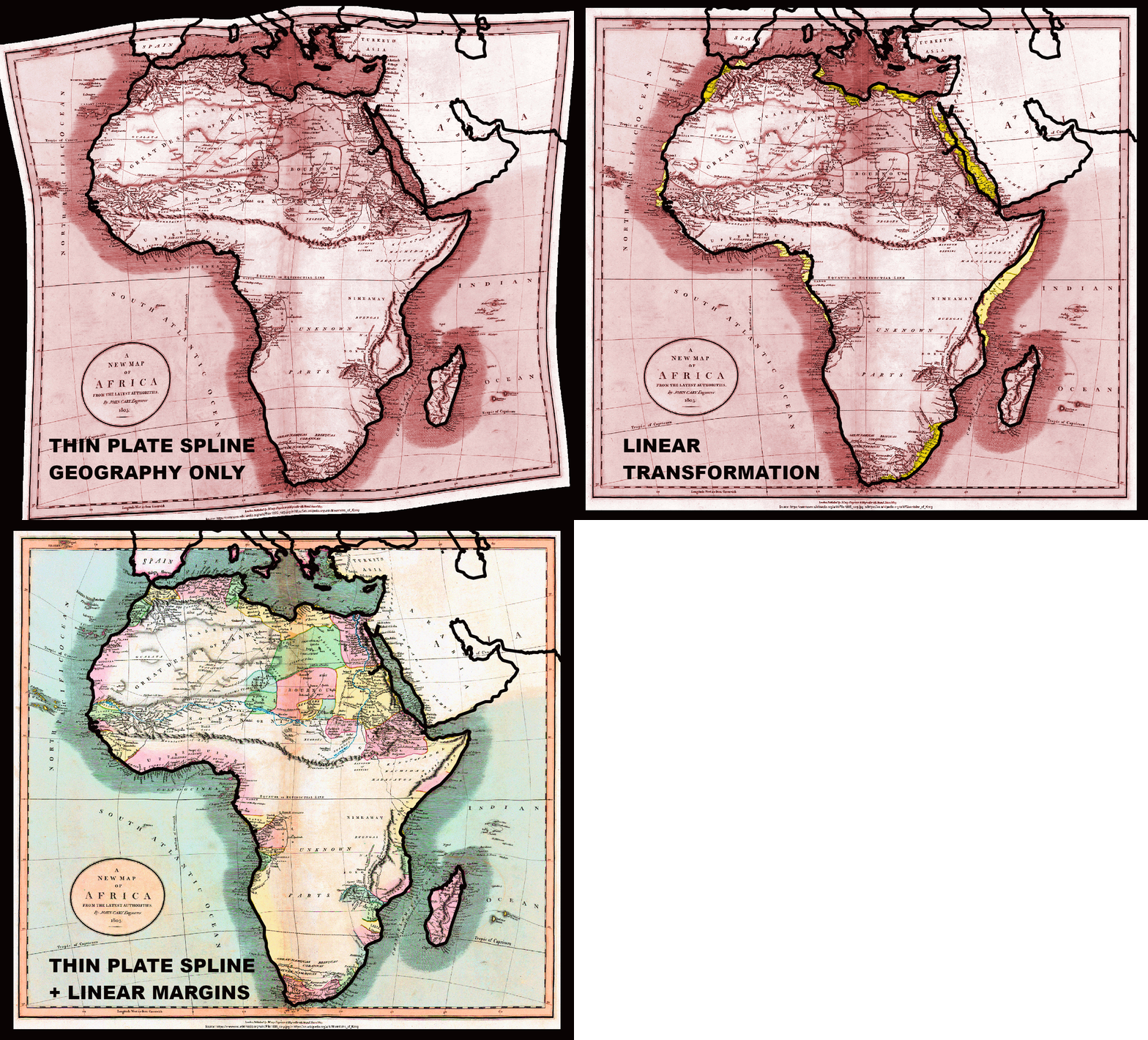
Let's take as an example the famous "New map of Africa, from the latest authorities", from 1805, by John Cary, engraver from London1. To compare it with actual maps, like to estimate and measure distortions, we have to place it into its corresponding digital coordinates, a GIS process called georeferencing, while also when correcting distortions it can be called georectification. There are different types of transformations, according to the needs:
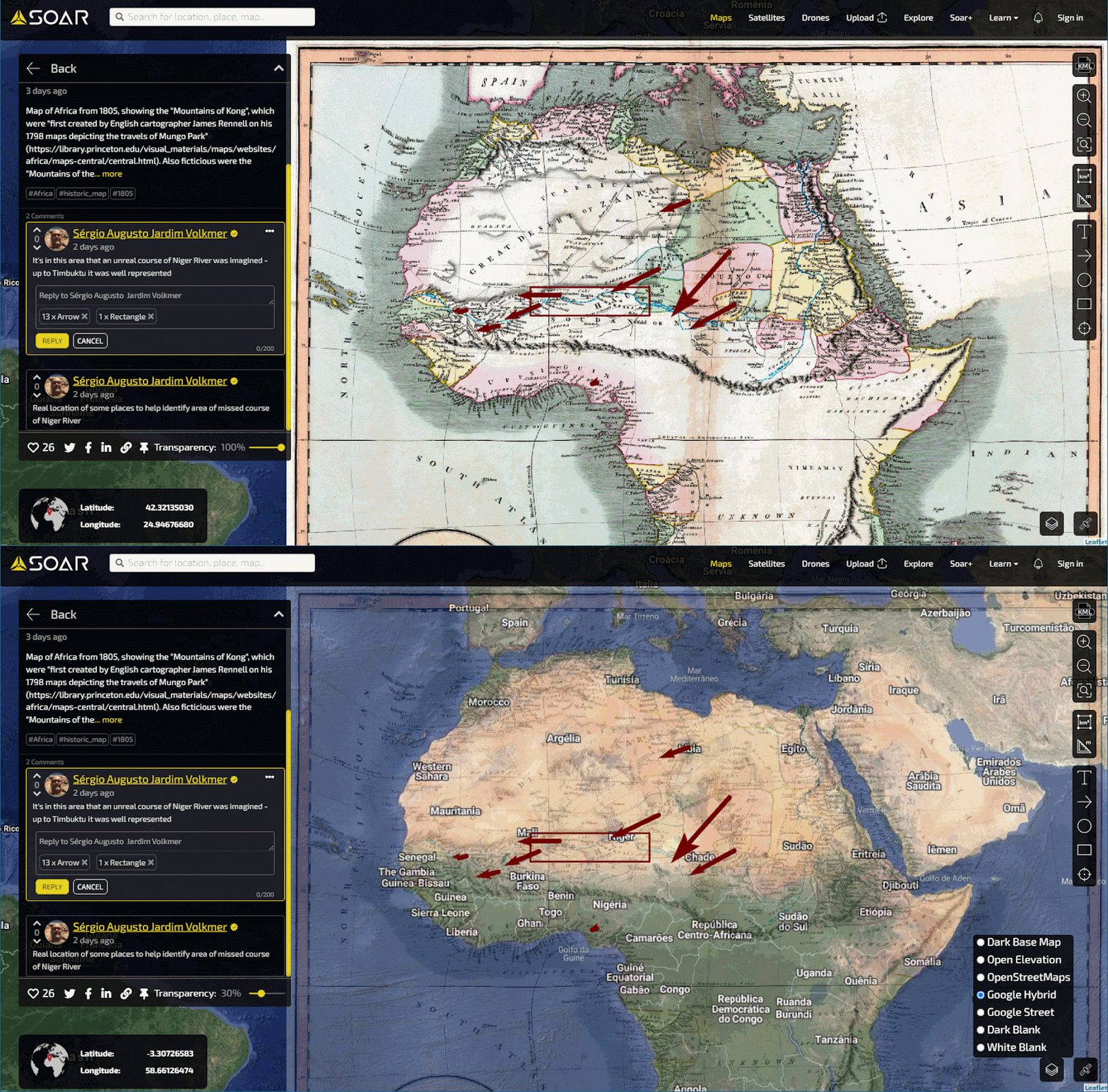
After georeferencing the map, we uploaded it to Soar, you can click here to see it.
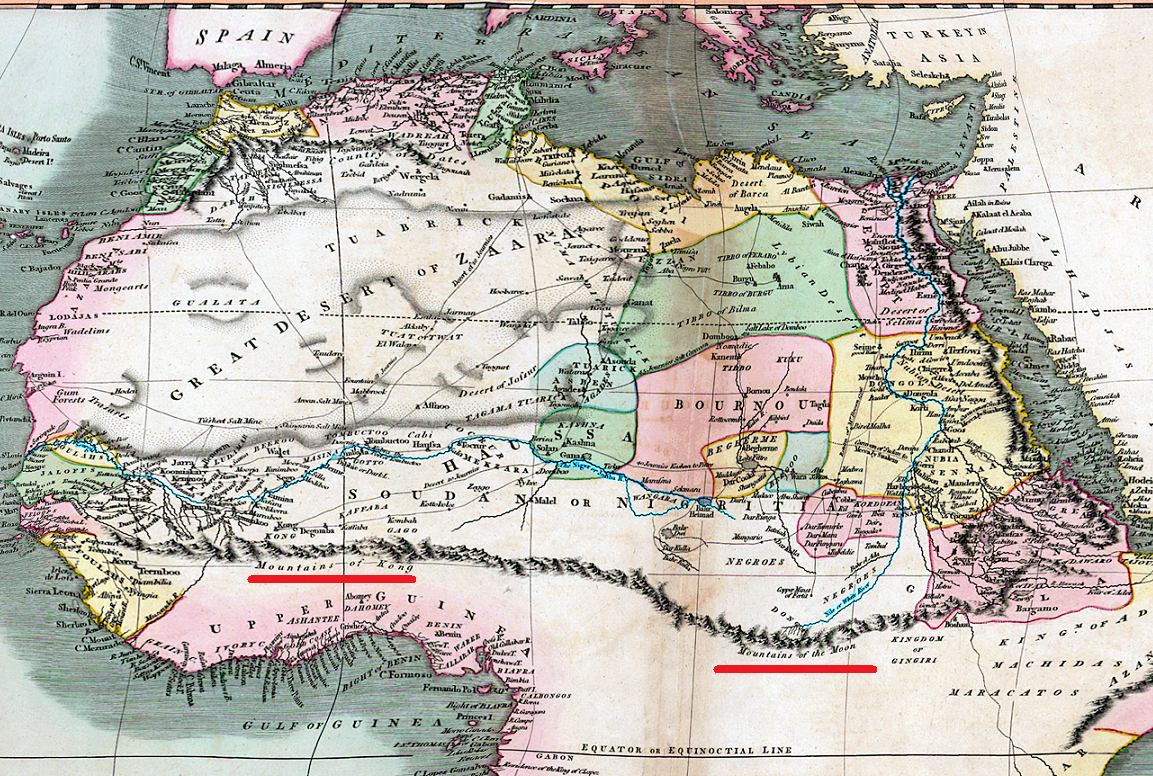
In this 1805 map, at a first glance, we can see a remarkable feature, a formidable east-west barrier of mountains dividing the continent in north and south (names underlined in red in the picture):
  • In its eastern side, it's still depicted the fabled “Mountains of the Moon” as a fictitious source of the Nile, represented since the map of Ptolemy from circa 150AD2.
  • In the western side, it represents the then recently known “Mountains of Kong”3, after reports by the scotsman explorer Mungo Park1, who was sent to explore Niger River, stating that this river should flow north-east (which is partially correct).
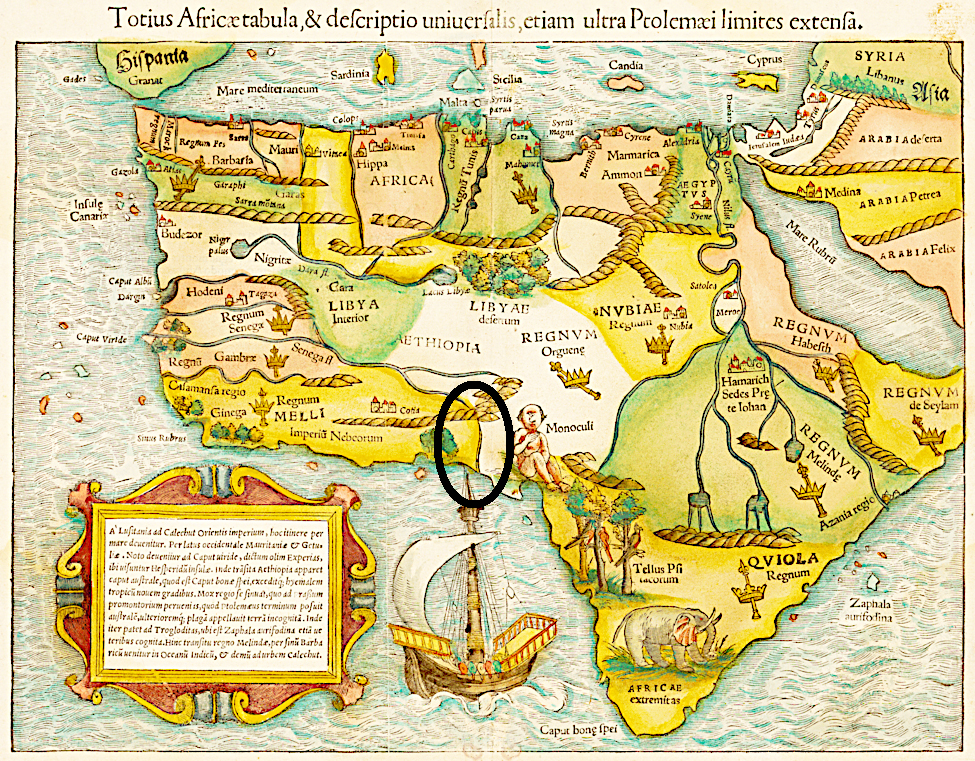
Here it's worth to note that in a 1554 map the Niger River, although equivocally named as Senegal River, is correctly shown in its other real southern part as discharging in what is today’s Gulf of Guinea1:
Actually, both the “Mountains of the Moon” and “Mountains of Kong” never existed in reality, they were imagined and depicted based on reports of others.

What Cary introduced as a novelty in his 1805 map was the connection of both fictitious mountain ranges, creating a new fabulous single mountain belt diving Africa. As a result, the Niger River had eliminated any possibility to turn to the south, ending in the middle of the desert, as also imagined by previous mappers, waiting decades to be correctly surveyed by the middle of the 1800's, but even then kept being mistakenly represented up to the beginning of the 1900's.

As later explorers found, and we can see today, Niger River has its sources in the Guinea Highlands near the Sierra Leone border, flowing north-east to southern Mali. Then it turns to south, discharging in its vast delta in southern Nigeria, in the Gulf of Guinea.
Browse the map on Soar to see for yourself: click here 

Do you like this story? Share it!
References:
1 https://library.princeton.edu/visual_materials/maps/websites/africa/maps-continent/continent.html
2 https://en.wikipedia.org/wiki/Mountains_of_the_Moon_(Africa)
3 https://en.wikipedia.org/wiki/Mountains_of_Kong
This blog was written by:

Sergio Volkmer

Sérgio is a mapping and remote sensing enthusiast, producing content for Soar. He studied geology and holds a Master of Philosophy, and is now an architect and contributor to OpenStreetMap and OpenData communities. He believes that information and knowledge are first steps towards personal fulfilment that lead to a better world.

View author's Soar profile